
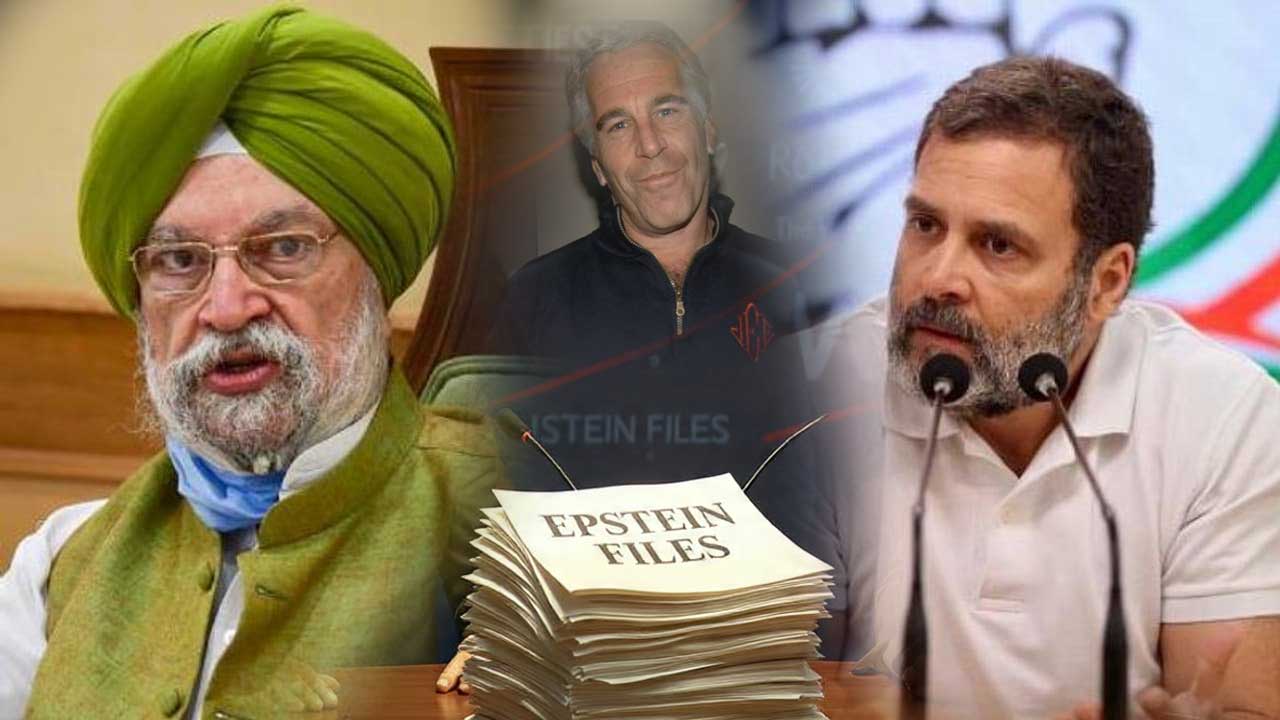
In politics, allegations often surface quickly, but proving them requires credible evidence. The recent controversy around the so-called “Epstein Files,” which sections of the opposition attempted to use to target Union Minister Hardeep Singh Puri, appears to be triggering political and legal debate. Political observers suggest that if accusations remain unsubstantiated, they could potentially lead to legal consequences — including the possibility of another defamation dispute involving Rahul Gandhi.
Puri Rejects Allegations, Denies Seeking Meeting
Responding publicly, Puri firmly denied any improper links with disgraced financier Jeffrey Epstein. He described the allegations as misleading and politically motivated.
According to Puri, the email exchanges now being cited were part of official institutional communication during a period when Epstein’s criminal activities were not widely known.
He emphasized that he never requested a personal meeting and that selectively quoting emails cannot change the broader factual context.
Document Mentions and Political Context
Sources indicate that among documents released by the United States Department of Justice, Puri’s name reportedly appears only a limited number of times. Supporters argue this weakens attempts to build a major political narrative around the issue.
Puri also noted that during the period in question, he was not associated with the Bharatiya Janata Party and was focused on promoting India’s economic and technological engagement globally.
He categorically denied ever visiting Epstein’s private island or travelling on his aircraft. He further stated that when controversies later surfaced involving certain individuals, he distanced himself from the International Peace Institute, a move supporters describe as precautionary and principled.
Possible Legal Implications
Legal experts note that allegations against a sitting Union Minister, if not backed by verifiable evidence, could potentially fall under defamation laws. Rahul Gandhi has previously faced legal scrutiny over public statements, and analysts suggest this episode could invite similar legal examination if disputes escalate.
Government supporters argue that relying on selective excerpts from international documents for political attacks signals strategic weakness rather than substantive debate. They maintain that Parliament should remain focused on policy and governance discussions.
Parliament or Political Strategy?
Questions have also been raised about the timing of the controversy. Critics from the ruling side claim the issue surfaced during key legislative discussions and economic policy debates, suggesting it may have been intended to disrupt parliamentary functioning or dominate media narratives.
Puri Reiterates Commitment to Transparency
Puri reiterated that his public career has been rooted in transparency, accountability, and national interest. He stressed that during the period being discussed, his focus was on enhancing India’s global economic position and attracting investment.
He maintained that facts and documentation ultimately matter more than political noise.
Political and Credibility Stakes
As the controversy continues to unfold, political analysts suggest the episode could impact credibility on both sides. If allegations remain unproven, it may reinforce arguments about responsible political discourse. Conversely, if new evidence emerges, it could reshape the debate significantly.

(Vivek Avasthi is a senior journalist and currently Editor-in-Chief of indianpsu.com. This is his personal analysis.)