

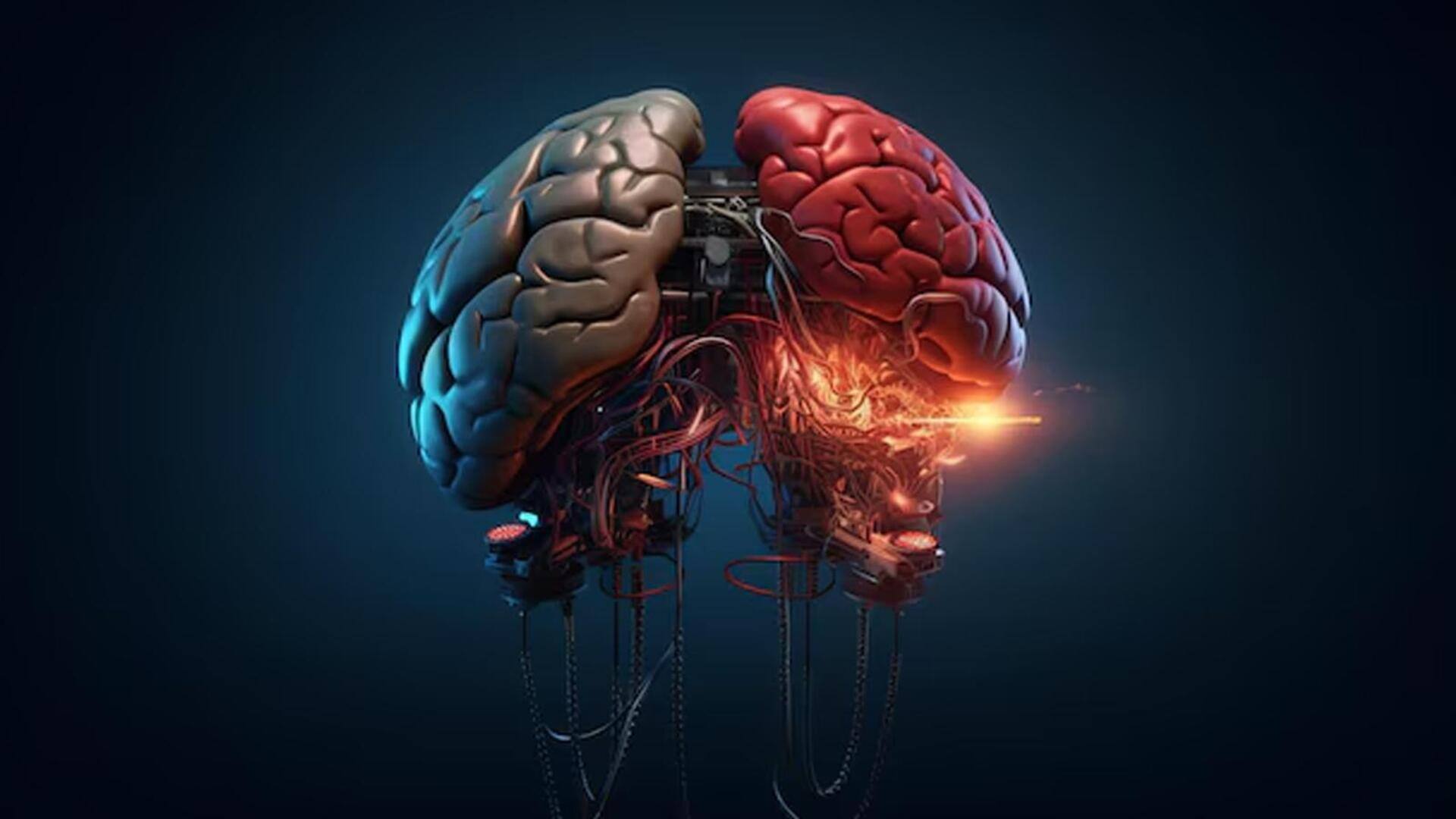
In a breakthrough that could transform the treatment of brain disorders, Indian scientists have developed a nano material that stimulates brain cells without the need for electrodes, lasers, or magnetic fields.
The discovery, published in the journal ACS Applied Materials & Interfaces, reveals that graphitic carbon nitride (g-C₃N₄) can naturally interact with brain activity to help neurons grow, mature, and function more effectively. Remarkably, the material also boosted dopamine production in lab-grown brain cells and reduced toxic proteins linked with Parkinson’s disease in animal models.
A Safer Alternative to Conventional Therapies
Current treatments such as Deep Brain Stimulation (DBS) require surgical implants, while other methods rely on external magnetic or ultrasound waves. Though effective, these approaches are invasive or limited. In contrast, g-C₃N₄ offers a non-invasive, biocompatible alternative.
When placed near nerve cells, the material generates subtle electric fields in response to the brain’s voltage signals. These fields open calcium channels in neurons, encouraging growth and strengthening connections between cells—without any external devices.
How It Works
Acting like a “smart switch,” the nano material responds to neurons’ resting and active states, helping maintain healthy brain activity. The researchers hypothesized that g-C₃N₄ would activate under negative membrane potential and stimulate cells, while switching off under positive potential, preventing neuronal fatigue.
Extensive experiments confirmed the hypothesis, including neuronal network formation studies, gene expression analysis, Ca²⁺ imaging, and immunofluorescence tests.
Implications for Neurological Disorders
The ability of this semiconductor material to stimulate brain cells and reduce disease-related proteins points to a potential therapy for millions affected by conditions such as Alzheimer’s and Parkinson’s disease, which are increasingly common among the elderly.
Lead researcher Dr. Manish Singh explained:
“This is the first demonstration of directly controlling neurons using a semiconductor nanomaterial without external stimulation. It opens a new pathway for treating neurodegenerative diseases like Parkinson’s and Alzheimer’s.”
Future Applications
Beyond healthcare, the discovery could aid next-generation technologies like brainware computing. Scientists worldwide are exploring brain organoids—miniature lab-grown brain tissues—as biological processors. Coupling them with semiconductor nanomaterials like g-C₃N₄ could enhance efficiency, pushing the boundaries of bio-inspired computing.
While researchers at the Institute of Nano Science and Technology (INST), an autonomous body under the Department of Science & Technology (DST), emphasize the need for further preclinical and clinical trials, the findings mark a major step toward non-invasive brain therapies.
From treating brain injuries to managing neurodegeneration, semiconductor nanomaterials could hold vast potential for the future of medicine.