
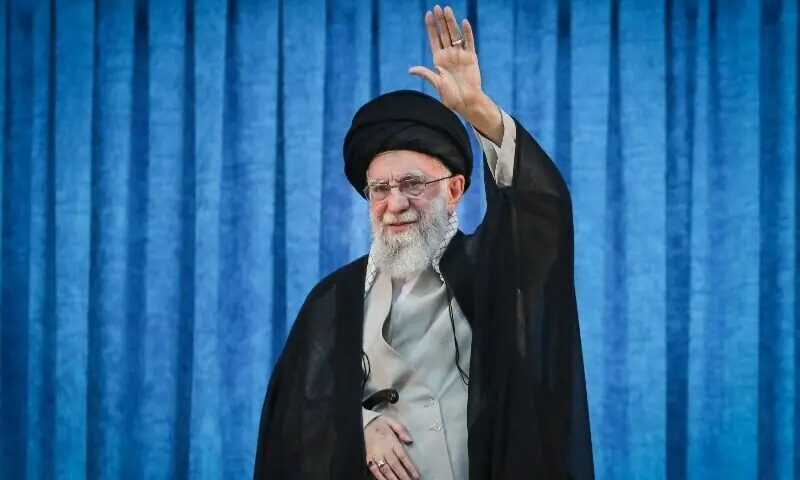
In a dramatic development with far-reaching geopolitical consequences, Iranian state media have confirmed that Supreme Leader Ali Khamenei has died following joint military strikes carried out by the United States and Israel. Authorities have declared a nationwide 40-day mourning period for the longtime leader, marking a historic turning point for Iran.
According to Iranian state television, Khamenei was killed at his office during coordinated attacks that reportedly began early Saturday. The confirmation follows earlier conflicting reports from Iranian outlets Tasnim and Mehr news agencies, which initially claimed the Supreme Leader remained “steadfast and firm in commanding the field.”
The announcement came hours after former US President Donald Trump stated on his social media platform Truth Social that the 86-year-old leader had been killed in the strikes.
In his post, Trump claimed advanced intelligence tracking systems enabled the operation, adding that cooperation with Israel ensured Iranian leadership figures could not evade targeting. He described the moment as a potential opportunity for political change within Iran, urging security forces including the Islamic Revolutionary Guard Corps (IRGC) to align peacefully with what he called “Iranian patriots.”
Meanwhile, Israeli Prime Minister Benjamin Netanyahu had earlier hinted at the development, citing “growing signs” suggesting Khamenei’s death. Reports from Reuters, quoting an unnamed senior Israeli official, also indicated that the leader’s body had reportedly been located following the strikes.
Uncertainty Over Iran’s Political Future
Khamenei’s death introduces significant uncertainty into an already volatile regional conflict. As Iran’s Supreme Leader since 1989, he held ultimate authority over military, political, and religious institutions, making succession a critical issue for the country’s stability.
Iranian officials had long prepared contingency plans for leadership continuity in the event of war with the United States or Israel. However, analysts warn that the sudden loss of such a central figure could intensify internal power struggles and heighten the risk of broader regional escalation.
Rising Global Concerns
The confirmation has sparked international concern over potential retaliatory actions and the possibility of expanded conflict across the Middle East. Global markets and diplomatic channels are closely monitoring developments as governments call for restraint and de-escalation.
With Iran entering an official mourning period and tensions running high, the coming weeks are expected to shape not only Iran’s political future but also the broader balance of power in the region.