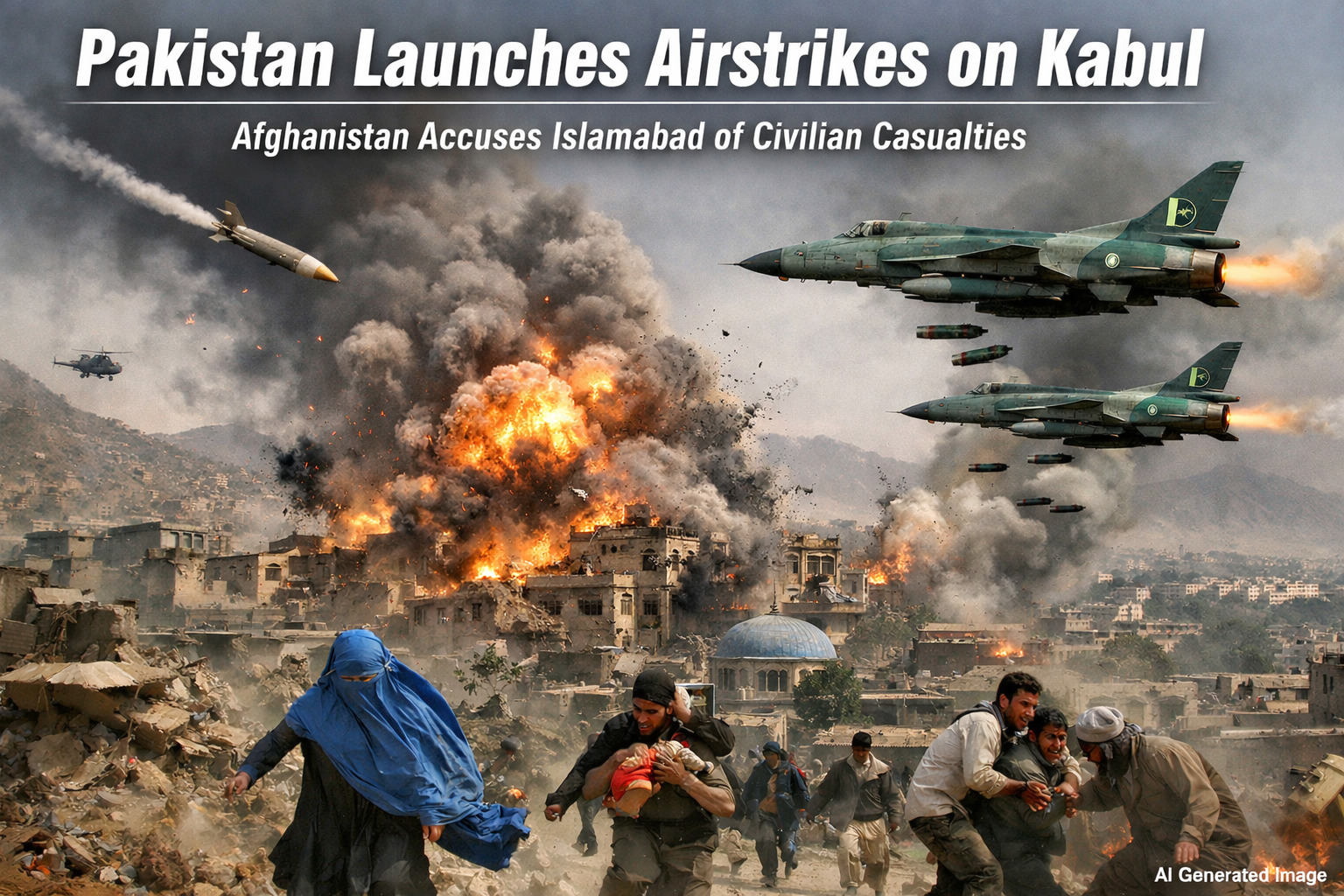


Tensions between Pakistan and Afghanistan surged overnight as heavy fighting broke out along the border, following a Taliban assault on Pakistani military positions. Security sources confirmed that the clashes began shortly after midnight in multiple locations along the Durand Line, the rugged and mountainous border dividing the two countries.
According to senior Taliban officials, Taliban fighters launched armed reprisals after accusing Islamabad of conducting airstrikes inside Afghan territory. They claimed to have seized two Pakistani border posts in Helmand province, a claim later corroborated by local Afghan authorities.
Pakistani security officials admitted that intense exchanges of fire took place, saying that Pakistani forces responded with full force. Explosions were also reported in Kabul and southeastern Afghanistan on Thursday, further escalating regional tensions.
In response, the Taliban-run Defence Ministry accused Pakistan of violating Afghan sovereignty. While Islamabad has not officially taken responsibility for the Kabul strikes, it reiterated its demand that Kabul must stop sheltering Tehreek-e-Taliban Pakistan (TTP) militants.
The TTP, an outlawed militant group sharing ideological roots with the Afghan Taliban, has been responsible for hundreds of attacks and the deaths of Pakistani soldiers since 2021. Pakistan alleges that TTP operatives train and regroup in Afghanistan before launching attacks across the border.
Diplomatic relations between the two neighbours have worsened in recent months, with Pakistan blaming Afghanistan for failing to curb cross-border terrorism. The 2,600 km Durand Line has long been a flashpoint, with frequent military skirmishes and border disputes.
Analysts warn that continued hostilities could further destabilize the region, already struggling with economic and humanitarian crises on both sides of the border.